Showing posts with label biodiversity. Show all posts

17.8.14

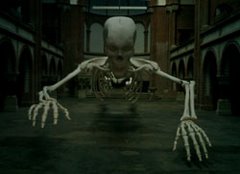
Of Crocodiles, Dragons and Monsters


Reading about the expulsion of crocodiles from their waterways and beaches in Australia. As the human population expands these reptiles are being killed and relocated into captivity for amusement in theme parks. Other forms of utilisation and commercialisation are to skin them for the fashion industry or just eat them as meat. 'Protected' Australian wildlife is tagged a 'pest' and in the name of public safety removed.

Locals fish in tiny dinghies or other vessels in man-eating crocodile billabongs. There is an outcry for culling if there is a 'crocodile attack'. Teens hang out for croc trap selfies, idiots swim in front of baited croc traps.

As new settlers sprawl into the water rich north of the continent, this ancient living dinosaur has to disappear. Wherever urbanisation unpacks its baggage, all is 'bulldozed clean'. Part of the frontier package are their dogs, which they think of as tamed beasts. But angst lingers about the wild beasts on the margins of their settlements.

Sensationalist media engages us in the narrative of cleansing 'the monsters' from their habitat and winning lands. Images of hero-like dragon slayers conquer the beast so that princesses and fairies can populate the territory. The winning dragon conqueror poses with his foot on the dead creature, trampling it to stake a claim over the entire loot and all the territory.


This meme has been viral since ancient times, the middle ages and continues in contemporary mindsets. The ever-same narrative rationalises the plunder and land grabbing. Unrelenting population growth drives displacements, evictions, and eradications of all fauna and flora. This radical and rapid depletion of nature will leave the 'monster' man with only rodents and pathogens at the end game.

Images:
Böcklin, Arnold,  Angelika, guarded by a dragon (Angelica and Ruggiero), c.1872 Collection of Alte Nationalgalerie, Berlin

Update:
Family of seven piles into tinny to go fishing in croc infested waters at Kakadu, 10.2014 

Here be dragon Climatic conditions are rapidly reaching an optimum for breeding dragons... 01.04.2015 http://www.nature.com/nature/journal/vaop/ncurrent/full/520042a.html


13.11.12

Repurposed Zebras and Ostriches into Dog Poo

Walking through Berlin, one has to navigate the daily 2.4 tons of dog feces on the pavement. Anually 960 tons of excrement are dumped on the streets by pet owners oozing  Salmonella,  E. coli, Clostridium and Campylobacter and other zoonotic infectious diseases.

Much of this public waste product is actually repurposed Zebra  and Ostrich imported from its habitat in South Africa. The Born-Again Raw Feeders (BARF) obtain the meat at the local pet butcher and stuff it into their 'best friend'.

Pet lovers finance a monoculture of pets and discourage biodiversity/ biomes. In Africa the Zebra is held to be a grazing competitor by farmers and is culled. Unlike the horse it refused to be domesticated for human purposes.

The largest living species of bird native to Africa, the flightless Ostrich (Struthio camelus) is also converted to meat to feed the urban wolves and lapdogs.


Source article:
Zebra Strips for the Dog, Berliner Zeitung, 13.11.2012, 'English'

Images:
-Stubbs, George: Zebra
-Brehms Thierleben, Ostrich,
-Arabian Ostrich painting from The Book of Animals by al-Jahiz,
Syria, 1335. The Arabian Ostrich was wiped out by bow, arrows, dogs and finally by firearms and motor vehicles.

-Wilhelm Trübner, Mastiff with sausages »Ave Caesar morituri te salutant«, 1878

Updates:
Injured racehorses and thoroughbreds refusing to be cash cows killed for dog meat abc, 14.11.12

Japanese company stops selling dog food made from endangered whales treehugger 06.01.2016

13.8.09

Camels - Invasive Species in Australia and Aerial Shooting

The dromedary or Arabian camel (Camelus dromedarius) was introduced in 1840 to the driest inhabited continent, Australia. As a beast of burden (images) it was to carry heavy loads and cross the dry and inhospitable lands. Their water-conserving abilities made them suitable as "draught and pack animals for exploration and construction of rail and telegraph lines; they were also used to supply goods to remote mines and settlements." Together with Muslim cameleers they pioneered inland routes of arid Australia from 1860s - 1930s.

The arrival of petrol powered motor vehicles in the 1920s made the work animal obsolete. Many were killed, but some escaped and prospered without predators. Today they are an invasive species in a desert ecosystem, constituting a threat to biodiversity.
Anthropogenic climate changes, permanent drought and increasing desertification are a stress for settlers, their stock, wildlife and feral animals. The camels are seeking the watering places where humans and their stock have settled. They are "tearing down fences and smashing troughs to get at water.""Camels are also an increasing hazard to motorists traversing outback roads."

They are to be culled in national parks and on pastoral leases. It will cost AS $19m to fire at them from helicopters, as was done in the aerial predator control programme shooting wolfs in the same way. Contraceptives are thought of as too ineffective as they would still have time to trample vegetation. Selling the meat in controlled harvest is also thought of as not feasible.

There is no doubt, invasive species have to be limited or eradicated from Australia, but is this method the most appropriate one?

Questions remain:
What is being done about live stock 'trampling' water courses and National Parks etc?
What is being done about epidemic populations of dogs and cats going feral?
What is being done about selling exotic flora and fauna?
What is being done about smuggling exotic flora and fauna?
What is being done about peak oil mobility in a desert environment?
What is being done about the many off-road vehicles in the 'outback', 'trampling' the landscape and biodiversity?

Camel season opens in Australia, The Great Beyond August 12, 2009

Update:
Another 60,000 feral camels from Central Australia will be culled through aerial shooting abc 05082010

Images:
Pisanello, Dromedary, 1425–1450 via Zeno
Camel, Abû Sa'îd 'Ubaydallâh ibn Bakhtîshû, Persian Master, 1297-1299, via
Zeno

19.6.09

Depriving Other Species of the Right to Live on Earth

Depriving other species of the right to a habitat on planet Earth:

The Polar bear and the Pacific walrus in Alaska are disappearing due to our actions.

"Both species are imperiled due to the loss of their sea-ice habitat due to global warming, oil and gas development, and unsustainable harvest...Polar bears and walrus are under severe threat, and unless we act rapidly to reduce greenhouse pollution and protect their habitat from oil development, we stand to lose both of these icons of the Arctic"

Via Center for Biological Diversity (2009, June 19). Polar Bear And Walrus Populations In Trouble, Stock Assessment Report Suggests. ScienceDaily. Retrieved June 20, 2009

The report by the Marine Mammals Management, U.S. Fish and Wildlife Service on the walrus and the Polar bear.
The U.S. Geological Survey (USGS) Study of the landscape, natural resources, and natural hazards of Alaska
The Cryposphere Today


Image: American Photographer, 1898 Alaska Goldfever stampede via Zeno

4.10.08

'World Animal Day' - Facing the Animal within

Is is "world animal day" today. One day to "To celebrate humankind’s relationship with the animal kingdom". The WAD is out there visualising what 'animals' means, namely dogs. In Sydney it is spelled out as: "...dogs, cats, ferrets, birds and mice" which are to be brought by pet owners to be given a blessing. Animals requiring their own habitat seem to be excluded. Only 'pets', degenerated lineages, richly bestowed with resources are to be 'blessed'.
The rest, not at our command, are pushed off the degraded planet. Mostly robbed of a habitat and resources, 'wild'-life is being made extinct by our actions on this planet.

Tolerated 'wild-life' in captivity, generating revenues, is frequently violated by young human beings. In the latest case, a seven-year-old boy illegally entered a N.T. zoo, " bludgeoned some of the animals to death with stones and hurled others over the two fences surrounding the crocodile enclosure...A turtle, four Western blue-tongued lizards, two bearded dragons, two thorny devil lizards and the zoo's 20-year-old goanna were among those killed....The fact a seven-year-old can wreak so much havoc in such a short time, it's unbelievable," said the zoo director. They are looking at suing the parents.

Going wild in the wild
Many formally protected native animals get violated in their remaining fragmented habitat. Just some of the recent hate crimes:

The Koala
Kangaroos
Birds

These are just a few examples of hate crimes committed by individuals/ groups against iconic and 'protected' creatures of Australia. There is also the systemic culling, shooting, sterilising, poisoning (baiting) etc of wild-life as a form of 'management'. It is a mystery why Australians seem to have so much hate for their iconic native animals and pamper foreign animals. But often, they too get sadistically abused, dogs get burnt, horses raced to death.
Cruelty against pets is also right up. "Animal cruelty by children is correlated with exposure to domestic violence". Working on the mental health of young human beings prevents not only cruelty against pets and Australian animals, but also is a good strategy to prevent violence between human beings.

Still, the ever expanding sprawl of industrialised human society is pushing the animal kingdom off the planet. Animals that are commercialisable or are obedient to our whimsical wills may stay for a while longer. The next round is for humankind’s relationship with the animal within themselves and others.

Images:
1. Bruegel d. Ä., Jan: Paradise 1620, via Zeno
2. Haeckel, Ernst: Plate 79: Lacertilia. Lizards via Zeno
3. Blake, William,1819, Tate Gallery,via Zeno

Links:
World Conservation Union
The Encyclopedia of Life

The Writings of St. Francis of Assisi

Updates:
- Almost one in four mammals are at risk of disappearing forever, according to the latest comprehensive assessment. IUCN 061008
- "Australia a key culprit. One in five Australian mammal species is in danger of dying out, the highest proportion of any developed country, the global survey of more than 44,000 animal and plant species found." SMH 061008

- "We've seen over 30 extinctions in Queensland since records were kept, we've got 151 endangered plants, 51 endangered animals, we've got 220 endangered regional ecosystems, so Queensland has really got to get going to stop a tidal wave of extinctions.They'll go extinct on massive scales, many times above the natural level of extinction...The current rates of extinction that are caused by people are 20 or more times the natural rate of extinction." abc 071008
- Dolphins are being lured with fish, then attacked by local youths in Whyalla in South Australia. The dolphins were tame because of human feeding. Youths dropped rocks on the marine mammals. abc 151008
- A killed platypus, an endangered lungfish and other fish were found dead in an illegal net...along Obi Obi Creek near Kenilworth. Maroochidore.The EPA is calling on the public for help. abc 171008

- "Sickening" attacks on endangered birds on South Australia's west coast:
"Two white-bellied sea eagles and a juvenile coastal raptor have been found with bullet wounds near Searcy Bay, Ceduna and Port Fowler in the past three weeks. In the case of the white-bellied sea eagle, we know that there are only about 50 breeding pairs left in South Australia so they're a very endangered species " abc 171008
- An 80 years old, blind flamingo in a zoo has been bashed by a 17 yo ,18 yo and 19 yo persons in the middle of the day. The animal is in a critical condition.
Adelaide. Do we need to cage animals to protect them from human beings ? abc 301008 >The flamingo has survived, but is so traumatised that all food is refused. The Adelaide Zoo is considering higher fences to protect the animals from violent human beings. abc 021108

21.9.07

The Nullarbor - from diversity to BIG monotony

The Nullarbor is the world's largest piece of limestone.The vegetation consists mainly of “ bluebush and saltbush plants, hardy shrubs that are drought-resistant and salt-tolerant." The area is arid and almost treeless. The karst stretches over 200,000 km² (77,200 sq miles). Some of the “the worlds largest semi-arid cave karst system ” is protected by National Parks.

Aboriginal people have occupied it for 1200 generations, “compared with a maximum of 8 generations of European occupation.” The Nullarbor Plain has many indigenous historical sites, five known cave art sites and numerous hand stencils (pdf).
Preserved meteorites are in the area.

Additionally the fragile limestone caves have been found to be an “palaeontological "treasure trove" “ of extinct marsupial lions.
The Great Australian Bight “receives very little...runoff “ and is home to whales, sharks, albatrosses, leafy sea dragons.

The most recent occupants (and visitors) tend to be only mobile in motor-cars. "Most people try to traverse the [Nullarbor] journey as quick as possible and they just endure it..” Maybe this is not a remark about the Nullarbor, but about a way of perceiving the environment (in Australia) when racing to get to 'it' or 'getting away from it all'. Knowledge and a positive disposition to the land (scape) would probably aid 'seeing'/understanding. The inability to see 'country', makes Australians pop BIG artifacts into the landscape, usually after it has been shaved. Then there is a reason to travel to 'it' and pay for 'it'.

The answer to the 'unused space' of the Nullarbor is to put “the world's biggest golf course” on top of it. It will be “ three times the size of Japan, twice the size of Texas.. 1,300 kilometres across the Nullarbor Plain”. “..Hopefully this is the catalyst for actually slowing people “ are the hopes of the tourism industry.

Already impacts by increasing visitor numbers is resulting in damage. The N.P. is the size of Tasmania and enforcement is limited by staffing. Golfing is associated with huge water needs and mostly toxic run offs. This would impact significantly on the diverse marine and terrestial flora and fauna of the area.

Could the Federal Government not fund its unique natural assets, instead of furthering another unsustainable venue, that might eliminate what is special about Australia. Local or o.s. tourists are unlikely to visit such a venue. Keep the natural, indigenous, paleontological heritage of the Nullarbor plain as an asset.

Ecological Communities - A Biological Survey of the Nullarbor Region, S.A.gov
The Nullarbor Plain - world’s largest limestone karst landscape, The Wilderness Society
Great Australian Bight, BBC documentary
Cave art in Australasia, Robert G. Bednarik
Image: Eora handstencil on Sydney sandstone

4.4.07

Hack, mix, distribute and eat – your plastics

Since the beginning of time human beings have utilised the 71 % of the Earth's watery surface to dump their rubbish. What has changed, is the massive population and the nature of the artificial anti-products that are now disposed in the world oceans by individuals and industry. Apart from the cost-effective discarding of 'millions of tonnes of sewage and toxic waste' gigantic amounts of plastic is added. ”80% of marine debris originates from land based sources.” Just the plastic alone floats for hundereds of years on the surface and is distributed/ 'flushed' with the ocean currents to all corners of the globe (map). With time the pellets of domestic and industrial waste develop into ever smaller particles. They are given the cute term: 'Tears of the Mermaid'. These toxic, microscopic particles then enter living organisms in the ocean at all levels. They remain and accumulate in the aquatic and terrestial living beings.The degradation of the entire food-chain is the inheritance left behind.
The issue is unfortuntely not sufficiently important to act on, there have been various reports over the years – all in wane. Some attention is generated now as there is a financial impact on large boats having trouble getting thorough the plastic debris.
More on causes and effects
Disposable Oceans, Greenpeace
Mother Jones defending oceans

14.3.07

What plants we tolerate in our urban parks

A study about urban parks has found that "Increasing human population is significantly related to decreasing native species and increasing nonnative species...Higher levels of human disturbances such as trampling, air pollution, or arson have more of a destructive effect on native species.” The goal to feature biodiversity in the urban wilderness fails as only tough and introduced plants survive the “repeated human disturbances”.